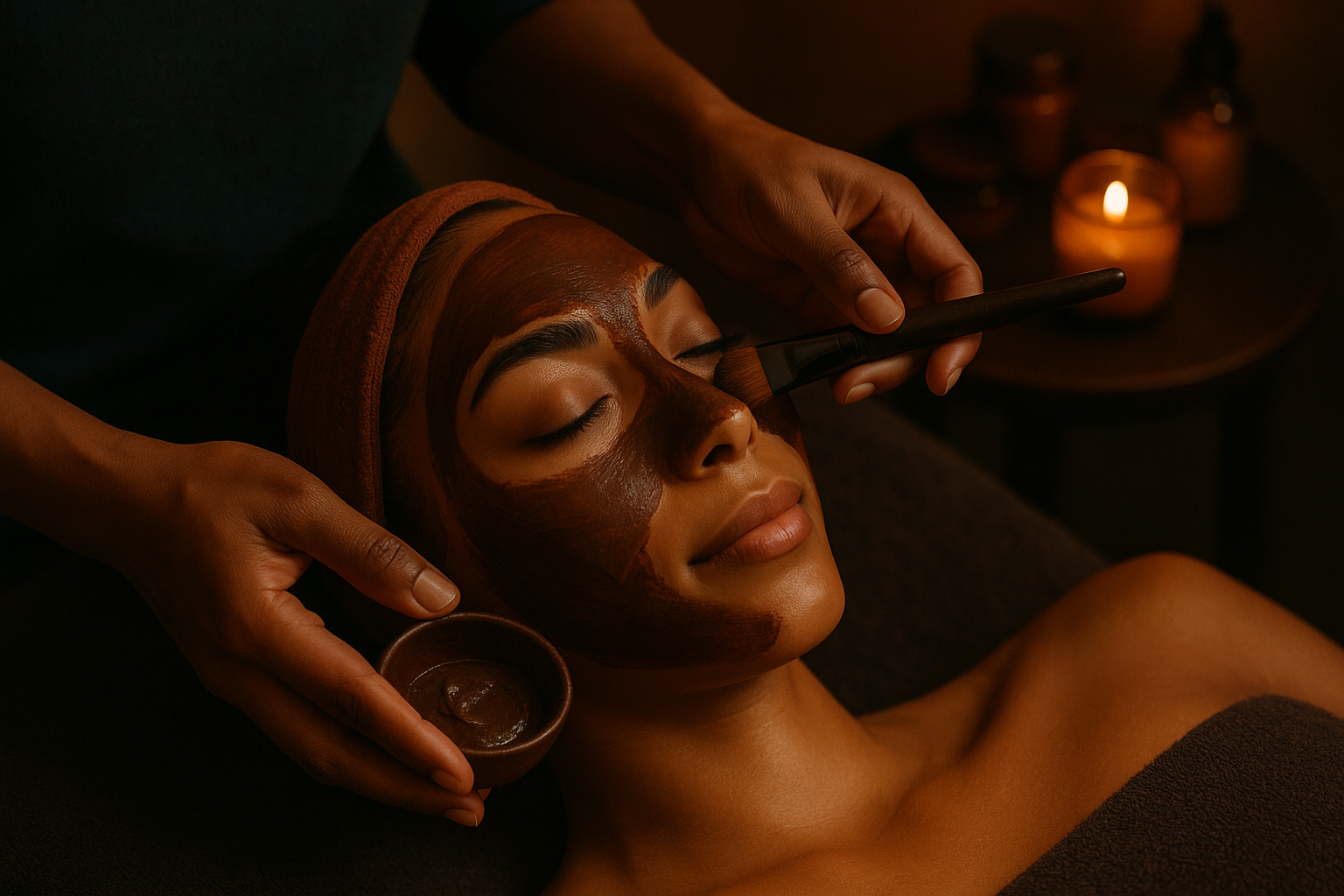
Most people leave a spa facial feeling relaxed, maybe a little glowy, and genuinely unsure what just happened to their skin. That uncertainty is by design. The beauty industry has spent decades making skincare feel like something you receive rather than something you understand. A treatment happens to you, you look nice for a few days, and then you book again. Nobody explains the mechanics. Nobody tells you why your skin looks better or how long that will last or what to expect if you keep going. After sixteen years in the treatment room, I think that's a problem worth fixing. So here is a plain-language answer to a question I get asked constantly: what does a facial do for your skin, really?
Why Your Skin Looks the Way It Does Right Now
Skin is living tissue. It's constantly doing things: producing oil, shedding dead cells, building collagen, repairing minor damage, responding to what you eat and drink and how much you sleep. When it's working well, you don't think about it. When it isn't, you see it in dullness, rough texture, uneven tone, fine lines that seem deeper than they should, or that general tired look that no amount of concealer quite covers.
The outer layer of your skin, the stratum corneum, is made up of dead cells. This is not a flaw. Those cells form a protective barrier that keeps moisture in and irritants out. But they don't shed perfectly on their own, especially as you get older. Cell turnover slows down. Dead cells pile up unevenly. The result is that dull, slightly rough surface that makes skin look tired even when you aren't. Underneath that layer, living cells are still doing their job. The problem is that product and light interact with that rough outer surface before they ever get to the living skin beneath it. Concealer sits in dry patches. Moisturizer can't fully penetrate. Your skin reflects light unevenly, which is what makes it look flat or tired rather than clear.
At the same time, deeper in the dermis, collagen production slows every year after your mid-twenties. Collagen is the structural protein that gives skin its firmness and its ability to spring back. When you have plenty of it, skin looks plump and tight. When you have less, it looks thinner, looser, and more lined. This isn't fear-based marketing. It's biology, and it's gradual and completely normal. The question is what, if anything, you want to do about it.
What Does a Facial Do for Skin at Each Layer?
A professional facial works on multiple levels simultaneously, and understanding those levels is what makes the difference between seeing results and feeling like you wasted $175. The surface, the barrier, and the deeper dermis all respond differently depending on the modality used. A good esthetician isn't just giving you a relaxing hour. She's making a specific set of decisions based on what your skin actually needs.
At the surface level, treatments like microdermabrasion physically remove that uneven buildup of dead cells. The handpiece uses fine crystals or a diamond tip to buff away the outer layer in a controlled, even way. What you're left with is a smoother surface that reflects light more evenly, lets your skincare products actually penetrate, and gives skin an immediate clarity and brightness that isn't a trick of lighting. A Classic Microdermabrasion session at Heart of Texas Lashes costs $175 and takes about an hour. The results are visible the same day, not after a series of four treatments or a six-week wait. That said, one session treats what's on the surface right now. It doesn't rebuild collagen or address laxity. Knowing what a treatment does and what it doesn't do is the whole point of this article.
At the barrier and hydration level, treatments like the Oxygen Facial work differently. Rather than removing surface buildup, they flood skin with oxygen and deeply hydrating actives. Skin that looks tired often isn't just dull, it's dehydrated. Dehydrated skin loses its plumpness, and fine lines that are really just dehydration lines get more obvious. An Oxygen Facial addresses that directly. The pressurized delivery system pushes oxygen and hydrating ingredients past the surface layer and into the living tissue underneath. The result is that swollen-with-water look that reads as healthy and rested, because the skin actually is more hydrated. Pricing runs $175 to $300 depending on the add-ons and your skin's needs on that particular day.
At the collagen and structural level, two treatments I offer go deeper than the surface entirely. Microchanneling uses a device with very fine needles to create thousands of tiny, controlled micro-injuries in the skin. Your body reads those micro-injuries as damage and sends healing resources, including collagen-building cells called fibroblasts. Over the weeks that follow a session, those fibroblasts lay down new collagen. Fine lines soften. Texture improves. Skin gradually firms in a way that isn't about surface brightness but about actual structural change. One session is $200. Realistic expectations: you'll see some immediate glow from increased circulation, and you'll see more significant texture and line improvement over the four to six weeks that follow as collagen builds. This is not a one-and-done treatment for dramatic structural change, but as a consistent practice, it genuinely moves the needle on collagen density over time.
Jet Plasma works on a different mechanism entirely. It uses ionized gas to create a plasma arc just above the skin's surface, delivering controlled thermal energy without any needles or injections. That energy triggers a tightening response in the skin's connective tissue and stimulates significant collagen remodeling in the weeks that follow. A single Jet Plasma session at $600 delivers real, measurable tightening. The three-session series at $1,500 is the flagship offer because three sessions spaced appropriately apart produce cumulative results that a single session simply can't match. This is the treatment I reach for when someone wants visible tightening and firmness without going the injection route.
Why What You've Been Doing at Home Isn't Enough
This is not a pitch for more products. Most people are already using too many products, not too few. The issue is penetration and mechanism. Every skincare product you apply at home is stopped at that outer barrier layer to some degree. Retinols, vitamin C serums, peptides, all of them work better on healthy, evenly-exfoliated skin. They work dramatically better when delivered into skin that a professional has just prepared. Home skincare maintains what professional treatments build. It's not a substitute for it.
There's also the problem of guesswork. When you're choosing products at a drugstore or a Sephora, you're choosing based on marketing copy and your own best guess about what your skin needs. Sometimes that guess is right. Often it isn't. I've had clients come in using four hydrating products and still presenting as dehydrated because none of them were actually penetrating. I've had clients avoiding oil-based products because they thought they had oily skin when what they actually had was a damaged moisture barrier producing excess oil as a compensatory response. Sixteen years in the treatment room teaches you to read skin, not packaging.
The other failed solution worth naming: the single-treatment miracle. Beauty marketing loves a before-and-after. It implies that one session of something transforms your skin fundamentally. Some treatments do produce visible results after one session, and I'll tell you which ones. But the most meaningful, lasting changes to skin texture, collagen density, and firmness come from consistency over time, not from chasing a dramatic single-session result. If someone is promising you a dramatic transformation from one appointment, be skeptical. Honest esthetics means telling you what's actually possible and in what timeframe.
The Part Nobody Talks About: What Happens After You Leave
The session itself is the beginning, not the whole story. This is true of every professional treatment, and it's one of the things I make a point of explaining to clients in the treatment room because the beauty industry almost never does.
After microdermabrasion, your skin is freshly exfoliated and more permeable than usual. That means your evening skincare routine that night will absorb better than it normally does. It also means your skin is more sensitive to sun exposure for a day or two. Sunscreen is not optional. After microchanneling, your skin is in active repair mode. The micro-injuries are tiny and controlled, but your immune response is real. You'll likely see some redness for 24 to 48 hours and then a settling period before you start to see the collagen-building results a few weeks out. You should not apply active exfoliants or strong acids in the days immediately following a microchanneling session. After Jet Plasma, the treated areas may experience some light crusting as the skin heals, which is normal and part of the process. The tightening effect becomes more apparent as healing progresses and collagen remodeling occurs over the following weeks.
None of this is complicated. But knowing what's happening and why makes all the difference between panicking about a normal healing response and understanding that your skin is doing exactly what it's supposed to do.
What Sixteen Years Has Taught Me About What Skin Actually Needs
The clients I've worked with for two, three, five years have something in common. They stopped chasing the latest product and started understanding their own skin. They come in knowing roughly what their skin needs seasonally. They know when they're dehydrated versus when they're breaking out. They know which treatments maintain their results and which ones push them forward. That's not because they became skincare obsessives. It's because I tell them things in plain language and they remember them.
One client I've seen for going on four years came in initially convinced she needed to address her "large pores." She'd been sold a series of pore-minimizing products and was frustrated that nothing was working. What she actually had was a combination of dehydration, some mild congestion, and surface texture from inconsistent exfoliation. None of that required a pore-minimizing product. A few sessions of microdermabrasion and an honest conversation about her home routine later, her skin looked completely different. The pores hadn't changed. The texture around them had, and that's what she'd been seeing in the mirror all along. Nobody had told her that.
That's the version of esthetics I practice. Not upselling a series of six treatments when two will do. Not recommending a product because it has a good margin. Reading the skin in front of me and explaining what I see and what I'd do about it. You can find reviews on my site from clients who've been coming for years. They describe a calm room, a practitioner who's on time, and consistently the same thing: she teaches you what's actually happening. That's intentional. An informed client makes better decisions and gets better results. It's that simple.
How to Know Which Facial Is Right for You
This is genuinely individual, and I'm cautious about giving a blanket prescription in an article because skin is specific. But here's a rough framework for thinking about it.
If your main concern is dullness, rough texture, or that flat tired look, start with microdermabrasion or an Oxygen Facial. Microdermabrasion addresses the surface buildup directly. The Oxygen Facial addresses dehydration and gives that immediate plumped, rested result. Both are real treatments with real mechanisms, not glorified relaxation sessions. Both will show you something visibly different when you look in the mirror.
If your main concern is fine lines and early texture changes, microchanneling is worth a conversation. One session will show you how your skin responds to collagen stimulation. If you respond well, building a consistent practice of three to four sessions a year, spaced appropriately, will produce cumulative results that compound over time.
If your concern is visible laxity or skin that is noticeably looser than it used to be, Jet Plasma is the treatment I reach for. It's the most significant non-injection tightening modality I offer, and the three-session series is the most complete version of that treatment. It's also a meaningful investment at $1,500 for the series, and I will tell you honestly whether I think your skin will respond well to it before you book.
If you're not sure, the honest answer is to come in and talk. I can look at your skin and tell you more in ten minutes than any article can. That's not a sales line. It's just true.
You'll never be talked into a service you don't need. That's a promise I make to every client, and it's the reason clients come back for years.
Understanding what does a facial do for skin is really about understanding that different treatments work at different depths and through different mechanisms. Surface treatments address what's visible right now. Collagen-stimulating treatments build something that takes weeks to show up but lasts significantly longer. Hydration treatments give skin what it's missing right now and create the environment where everything else works better. None of these are magic. All of them are real, and all of them work best when you understand what you're getting and why.
Ready to Find Out What Your Skin Actually Needs?
If you've been guessing at your skincare and not quite getting where you want to be, it might be time to stop guessing. Every facial at Heart of Texas Lashes comes with a real conversation about what your skin is doing and why. No pressure. No upselling. Just an honest look at what's actually happening and what would actually help.
Book your appointment on Vagaro and come see what your skin looks like when someone's actually paying attention to it. Or visit heartoftexaslashes.com to learn more about the full menu of services. Questions before you book? Call or text at (817) 969-1872.
Frequently Asked Questions
What does a facial do for skin that regular at-home skincare can't?
Professional treatments work at depths and with mechanisms that over-the-counter products can't replicate. Microdermabrasion physically resurfaces the outer layer in a controlled, even way that no at-home scrub matches. Microchanneling and Jet Plasma stimulate collagen remodeling at a level that topical products don't reach. Home skincare maintains what professional treatments build, but it's not a substitute for them.
How often should I get a facial for real results?
It depends on the treatment and what you're trying to address. For surface maintenance like microdermabrasion or Oxygen Facials, once every four to six weeks is a common rhythm. For collagen-stimulating treatments like microchanneling, spacing sessions six to eight weeks apart and doing three to four a year tends to produce cumulative results. Consistency over time matters more than how often you can get in.
Will I see results after just one session?
Some treatments, yes. Microdermabrasion and Oxygen Facials produce visible results the same day. Microchanneling shows some immediate glow but its real results build over four to six weeks as new collagen forms. Jet Plasma tightening becomes more apparent over weeks as the skin heals and remodels. Any treatment promising dramatic transformation from a single session deserves skepticism.
What does a facial do for skin that's already aging or showing laxity?
For visible looseness or laxity, the most targeted option is Jet Plasma, which triggers a genuine tightening response in the skin's connective tissue without needles or injections. Microchanneling also contributes to collagen density over time. These are not age-reversal treatments, but they do produce real, measurable changes in firmness with consistent use.
Is it normal for skin to look worse right after a facial?
Some redness immediately after is completely normal, especially with treatments like microchanneling or Jet Plasma that intentionally trigger a healing response. That's not your skin reacting badly. It's your skin doing what it's supposed to do. The redness settles within 24 to 48 hours for most clients, and the results show up as that process completes.
How do I know which facial to start with?
The honest answer is that it depends on what your skin actually needs, not what sounds most appealing. If you're dealing with dullness and texture, start with microdermabrasion. If dehydration and a tired look are the main issues, an Oxygen Facial is the more targeted choice. If you want to address fine lines and firmness over time, microchanneling or Jet Plasma are worth a real conversation. When in doubt, come in and let an esthetician look at your skin directly.